Electric vs Propane vs Diesel Forklift: Which One Actually Fits Your Operation?
Electric vs Propane vs Diesel Forklift: Which One Actually Fits Your Operation?
Choosing between an electric vs propane vs diesel forklift is one of those decisions that looks simple on paper and gets complicated fast in practice. You have three fuel types, each with real advantages, each with real limitations, and the right answer depends almost entirely on what your operation actually looks like day to day.
I have walked through hundreds of facilities over the years, and the pattern is always the same. Somebody bought a machine based on price, or based on what the last guy used, or based on a sales rep's recommendation, and now the forklift either does not fit the building, costs too much to run, or sits idle because nobody planned for the infrastructure it needs.
That is what this article is about. Not theory. Not spec sheets. Real guidance on forklift fuel type selection based on what I see in the field, so you can make a decision that holds up over years of daily use.
Understanding the Three Fuel Types
Before comparing anything, it helps to understand what each option actually involves, because the purchase price is only one piece of the picture.
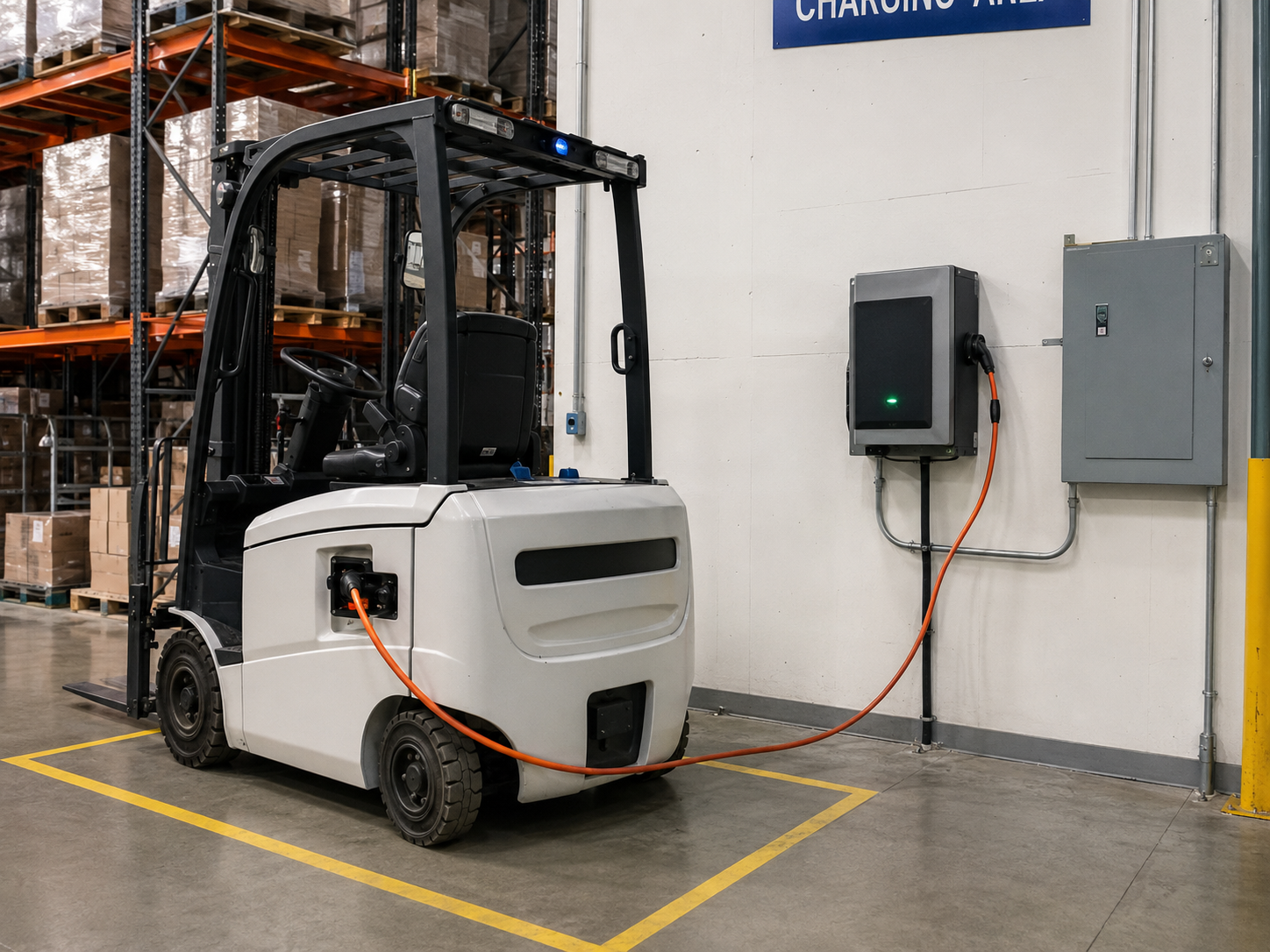
Electric forklifts run on rechargeable battery packs, either traditional lead-acid or newer lithium-ion. They produce zero emissions at the point of use, run quietly, and have fewer moving parts than combustion engines. The tradeoff is infrastructure. You need a charging station, potentially upgraded electrical capacity, and either a second battery for swap-outs or enough downtime in the schedule for opportunity charging.
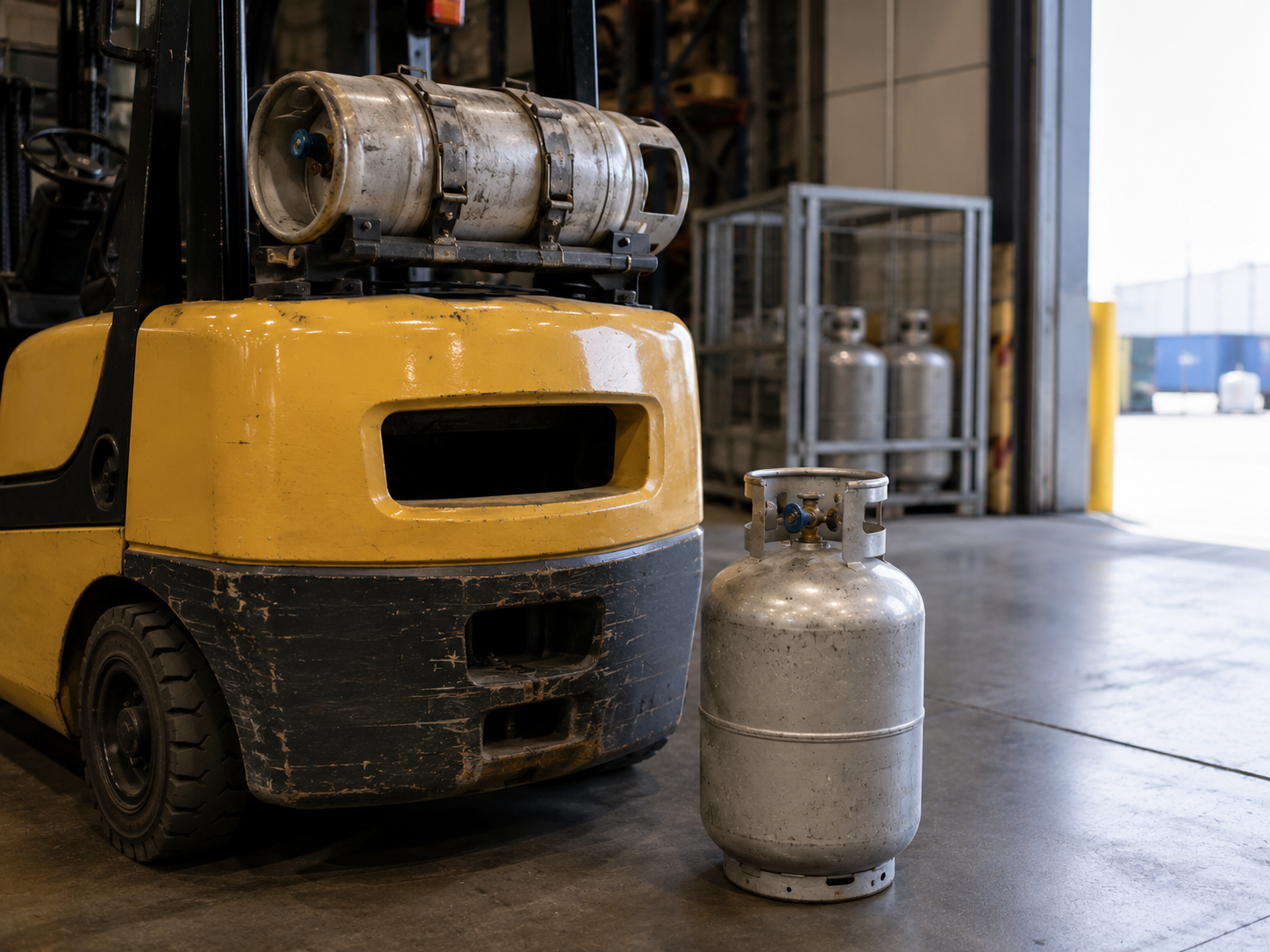
Propane (LP gas) forklifts use internal combustion engines fueled by refillable propane tanks. They are versatile, relatively affordable, and the refueling process is fast, just swap the tank and go. They produce emissions, which matters for indoor air quality, but modern propane engines are cleaner than they used to be.
Diesel forklifts are the heavy lifters. They deliver the most torque, handle rough terrain and outdoor conditions well, and are the go-to choice for lumber yards, construction sites, and operations where machines work outside in all weather. The downside is noise, emissions, and fuel cost. Diesel units are almost never appropriate for indoor use.
Electric Forklift Benefits: More Than Just Going Green
The shift toward electric has been accelerating, and for good reason. Electric forklift benefits go well beyond the environmental angle, though that matters too.
First, operating costs. An electric forklift costs significantly less to run per hour than a propane or diesel unit. Electricity is cheaper than propane or diesel fuel in most regions, and electric motors require less routine maintenance. No oil changes, no transmission fluid, no spark plugs, no exhaust system repairs. Over a five-year ownership cycle, the maintenance savings alone can be substantial.
Second, operator comfort. Electric units are quieter, produce no exhaust fumes, and typically have smoother acceleration and braking. In a busy warehouse where operators are on the machine for eight or ten hours, that matters more than most people realize. Fatigue, headaches from exhaust exposure, and noise-related stress all add up over time.
Third, maneuverability. Most electric forklifts have a tighter turning radius than their combustion counterparts. If your aisles are narrow, or if you are working in a space where every inch counts, electric is often the better geometric fit. If you have already read our guide on what size forklift you actually need, you know how important spatial planning is. The fuel type decision ties directly into that same conversation.
The catch with electric is always upfront cost and infrastructure. A comparable electric unit will typically cost more at purchase than a propane model, and the charging setup adds another layer of expense. Lithium-ion batteries have changed the game here, offering faster charging, longer life, and no maintenance compared to lead-acid, but they cost more upfront.
Where Propane Still Wins
Propane gets overlooked sometimes in the rush toward electrification, but it remains the most versatile choice for a lot of operations, and there are solid reasons why.
The biggest advantage is flexibility. A propane forklift can work indoors and outdoors. It refuels in about sixty seconds, just swap the empty tank for a full one and go. There is no downtime for charging, no second battery to buy, no electrical upgrades to your building. For operations running multiple shifts or facilities without the electrical capacity for a charging fleet, propane is hard to beat on pure uptime.
Cost of entry is lower too. A used propane forklift is typically the most affordable option in the warehouse forklift selection process, and propane infrastructure is minimal. You need a tank cage, a fuel supplier, and basic ventilation if running indoors. That is it.
The limitation is indoor air quality. Even though modern propane engines are cleaner than they were a decade ago, they still produce carbon monoxide, nitrogen oxides, and other combustion byproducts. In a well-ventilated warehouse with high ceilings and open dock doors, this is manageable. In a tightly sealed cold storage facility or a small enclosed space, it becomes a real concern. If your building has air quality regulations or sensitive product (food processing, pharmaceuticals, clean rooms), propane may not pass muster regardless of what the spec sheet says.
Propane fuel cost sits between electric and diesel. It is more expensive per hour than electricity but cheaper than diesel in most markets. The price fluctuates with energy markets, so budgeting requires a bit more forecasting than a fixed electrical rate.
When Diesel Is the Right Call
Diesel forklifts are not subtle machines. They are loud, they produce visible exhaust, and they are heavier than comparable electric or propane units. But for certain applications, nothing else comes close.
If your operation is primarily outdoor, diesel is almost always the answer. Lumber yards, steel yards, shipping container handling, agriculture, and construction all demand the kind of raw power and terrain capability that diesel provides. These machines handle uneven surfaces, gravel, mud, and inclines without complaint. They work in rain, snow, and extreme temperatures where battery performance degrades and propane systems can struggle.
Diesel engines also deliver the highest torque output, which matters when you are lifting heavy loads at height or pushing material across rough ground. If your operation routinely handles loads above 10,000 pounds, diesel gives you a power-to-weight ratio that is difficult to match with other fuel types.
The drawbacks are straightforward. Diesel is the most expensive fuel option per operating hour. Maintenance costs are higher than electric (though comparable to propane). Noise levels are significant. And emissions make diesel completely unsuitable for indoor use in most jurisdictions, full stop.
For warehouse forklift selection, diesel typically only enters the conversation when the machine will spend most or all of its time outside. If you are running a mixed indoor-outdoor operation, a propane or electric unit with outdoor capability will usually be the smarter investment.
The Decision Framework: Four Questions That Clarify Everything
When a customer asks me to help them choose between an electric vs propane vs diesel forklift, I start with four questions. The answers almost always point clearly in one direction.
Where will the machine work? Indoor only points to electric. Indoor and outdoor points to propane or electric with outdoor rating. Outdoor only, especially on rough terrain, points to diesel.
How many shifts are you running? Single shift operations can accommodate electric charging overnight. Multi-shift operations either need a battery swap program (expensive) or propane's instant refueling advantage. Three-shift continuous operations are historically propane territory, though lithium-ion is closing that gap fast.
What does your building's electrical infrastructure look like? If you have the capacity or are willing to invest in upgrades, electric becomes viable for almost any indoor application. If your building is older, electrical upgrades can cost as much as the forklift itself. Be honest about this number before committing.
What is your five-year total cost of ownership budget? Purchase price is a fraction of the real cost. Factor in fuel or electricity, maintenance, battery replacement (for electric), infrastructure investment, and projected resale value. When you run these numbers properly, electric often comes out ahead over five years even with the higher purchase price. But not always, and assuming it does without running the actual math for your operation is a mistake.
If you are not sure how to work through these questions, this is exactly the kind of thing a free site survey is built for. We come to your facility, assess the conditions, and give you an honest recommendation before any money changes hands.
Common Mistakes in Forklift Fuel Type Selection
The electric vs propane vs diesel forklift comparison trips people up in predictable ways. Forklift fuel type is one of those decisions where assumptions cost real money. I see the same handful of errors come up over and over.
Buying electric without checking electrical capacity first. The machine arrives, the charger gets plugged in, and the breaker trips. Or the utility bill spikes because the building was not set up to handle the draw. Always get an electrician's assessment before committing.
Choosing propane for a sealed facility. If your warehouse has limited ventilation, low ceilings, or air quality requirements, propane emissions become a health and compliance issue. I have seen operations forced to retrofit expensive ventilation systems or replace nearly new propane fleets with electric, all because nobody measured the airflow before buying.
Defaulting to diesel for an operation that is only partially outdoor. If the machine spends 60% of its time inside, diesel is the wrong choice. A propane unit or an outdoor-rated electric with pneumatic tires handles that split far better.
Ignoring resale value. Electric forklifts hold their value better than propane or diesel in the current market. That delta matters when you sell or trade the machine in five to seven years. Factor it into your total cost of ownership calculation. If you have read our guide on used vs. new forklifts, you already know how much this number moves the needle.
Frequently Asked Questions
Can I use an electric forklift outdoors? Yes, depending on the model and conditions. Many electric forklifts have outdoor ratings and pneumatic tires that handle paved surfaces, loading docks, and trailers just fine. What they typically cannot handle is rough terrain, heavy rain, or extreme cold, which is where diesel earns its keep.
How long does it take to charge an electric forklift? A conventional lead-acid battery takes six to eight hours for a full charge plus a cooldown period. Lithium-ion batteries can reach 80% charge in one to two hours and support opportunity charging during breaks. The technology gap between the two is significant and worth understanding before you buy.
Is propane safe to use indoors? With proper ventilation, yes. Most warehouses with standard ceiling heights, dock doors, and HVAC systems can safely operate propane forklifts. The key word is "proper." If you have any doubt, get an air quality assessment done. It is inexpensive and it protects your crew.
Which fuel type has the lowest total cost of ownership? In most indoor warehouse applications with single-shift or light two-shift operation, electric wins on total cost over five years. The electric forklift benefits in maintenance savings, energy cost, and resale value compound over time. For heavy multi-shift operations, propane can be more economical due to lower infrastructure costs. Diesel has the highest operating cost but earns its place in heavy outdoor applications where no other fuel type can do the job.
How does fuel type affect forklift resale value? Electric forklifts currently hold their value best in the used market, driven by growing demand and lower operating costs for the next buyer. Propane holds moderate resale value. Diesel resale depends heavily on condition, hours, and regional demand for outdoor equipment.
Making the Right Call
The electric vs propane vs diesel forklift decision is not about which fuel type is "best." It is about which fuel type fits your operation, your building, your budget, and your growth plan. Get that match right and the machine pays for itself. Get it wrong and you are dealing with workarounds, unexpected costs, and a piece of equipment that fights you instead of working with you.
At Level Warehouse Equipment Ltd., we help customers work through this decision every week. Our warehouse forklift selection process starts with a conversation, moves to a site visit, and ends with a recommendation that actually makes sense for your specific situation. No brand bias, no fuel-type agenda, just practical guidance from people who have been doing this for a long time.
If you are comparing options and the numbers are not adding up, or if you are not sure which direction to go, give us a call. The consultation is free, the advice is honest, and the goal is always the same: get you the right machine for the job.
Back to Resources