Forklift Delivery and Transport Across BC and Alberta: What to Expect
You found the right forklift at the right price. Now it has to get from where it is to your loading dock, and that step is where a lot of buyers get surprised. Forklift delivery in BC and Alberta is not the same as shipping a pallet. These machines are dense, top-heavy, and tall at the mast, and the routes between the Lower Mainland, the Interior, and Alberta include some of the toughest mountain highways in the country. A little planning before the truck is booked saves you money, delays, and the occasional damaged mast. Here is what actually drives the cost of moving a forklift, how to pick the right trailer, what changes in winter, and how to get your site ready for delivery day.
What Affects the Cost of Forklift Transport?
The biggest factor is weight, and most buyers underestimate it. A forklift's rated capacity is not its own weight. Because the counterweight has to balance the load, a 5,000 lb capacity forklift typically weighs somewhere around 8,000 to 9,000 lbs, and an 8,000 lb heavy cushion unit weighs considerably more. The service weight is printed on the data plate, so have it handy when you ask for a transport quote.
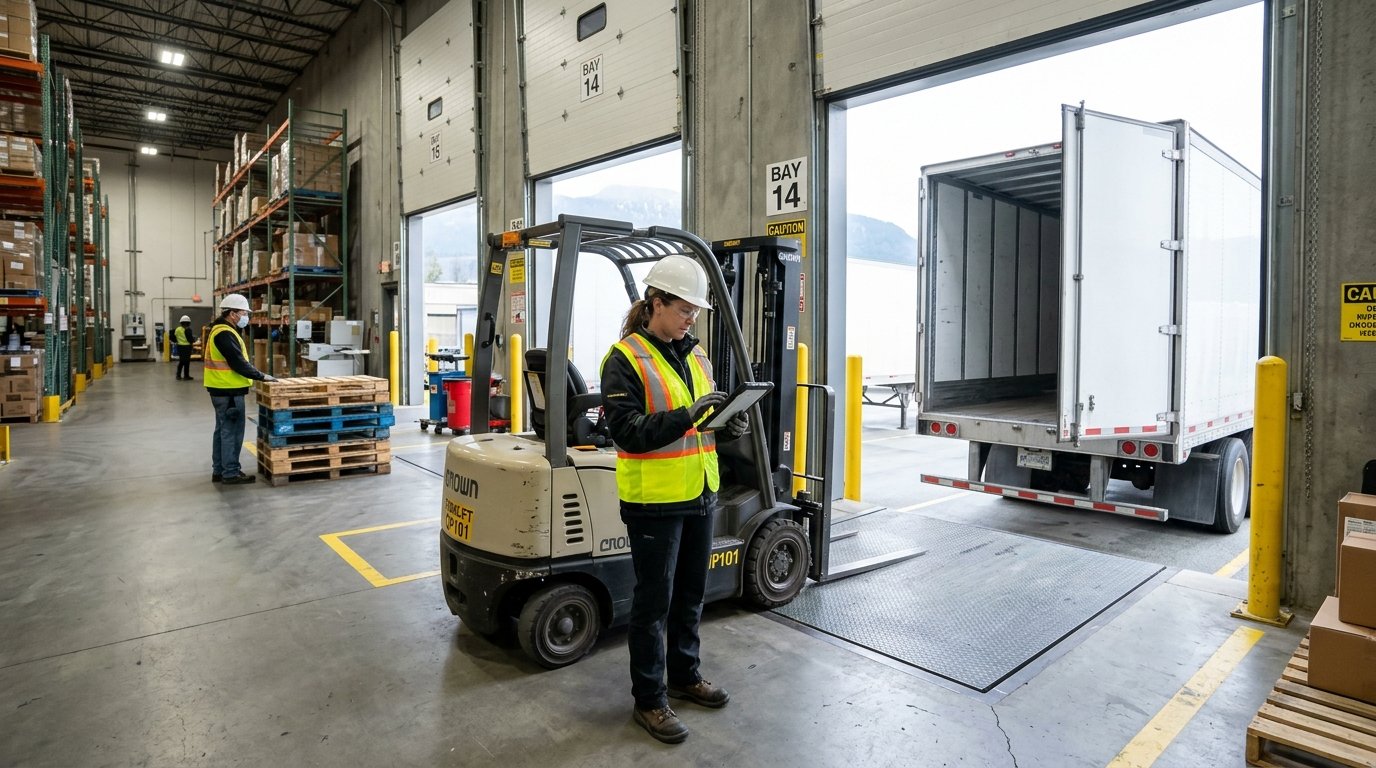
After weight, the main cost drivers are:
Distance and route. A run across the Lower Mainland is a short local job. Kelowna, Prince George, or Calgary means a full day or more on the road, and mountain passes add time.
Mast height and overall dimensions. Lowered mast height decides which trailer works and whether a tall triplex or quad mast needs special handling.
Trailer type. A tilt deck, flatdeck, and step deck are priced differently, and not every carrier has every type.
Site access at both ends. Tight laneways, overhead wires, gravel yards, and no loading dock all affect how long the driver is on site.
Timing. Rush or next-day delivery costs more than a flexible window, and winter weather can push schedules.
Ask for a delivered price rather than just the machine price. It is the only number that lets you compare two forklifts honestly.
Which Trailer Should You Choose: Tilt Deck, Flatdeck, or Step Deck?
The trailer has to suit the machine and the delivery site, not just the carrier's schedule.
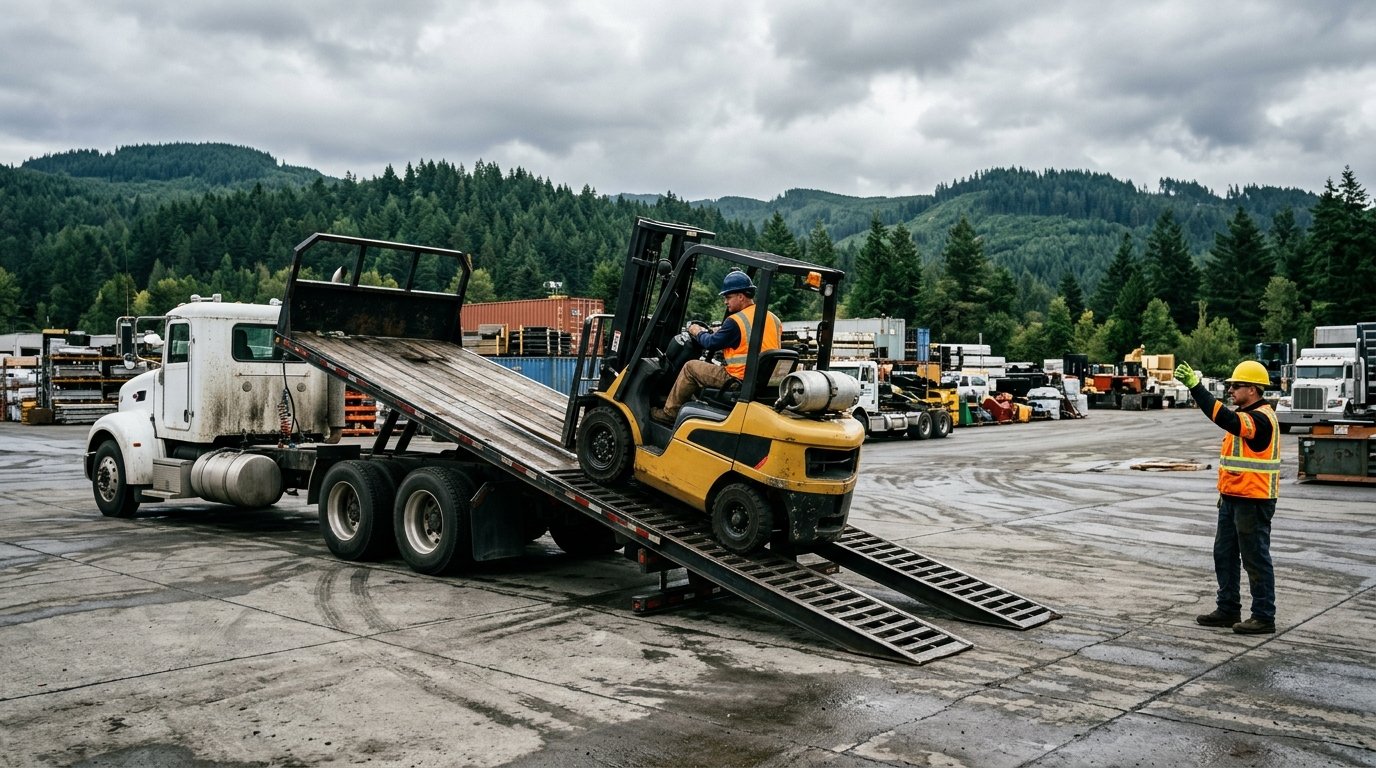
A tilt deck (sometimes called a roll-back) tips down at the rear so the forklift can be driven straight on and off by a qualified operator. No dock, no ramps, no second machine. That makes it the most common choice for standard counterbalance forklifts, pallet jacks, and walkie stackers going to sites without a dock.
A flatdeck carries more weight and longer loads but sits higher, so you usually need a loading dock, portable ramps, or a crane or second machine to load and unload.
A step deck has a lower rear deck, which buys extra clearance for taller machines and heavier units. Like a flatdeck, you need a loading dock or ramps to unload.
Whatever the trailer, the forklift needs to be secured properly. That means rated chains and binders on the designated tie-down points, the forks lowered and tilted forward, the parking brake set, and the mast fully lowered. On propane units, the cylinder should be closed off or removed for transport. If a carrier talks about strapping a forklift down with a couple of ratchet straps, find another carrier.
How Do Winter Routes, Mountain Passes, and Chains Affect Delivery?
Moving equipment between the coast, the Interior, and Alberta from fall through spring is a different job. The Coquihalla, the Fraser Canyon, the Okanagan Connector, Rogers Pass, and the Crowsnest all see snow, closures, and chain-up conditions. In BC, commercial vehicles on most mountain highways must carry chains through the winter season, generally October 1 to March 31, and drivers must use them when signs require it.
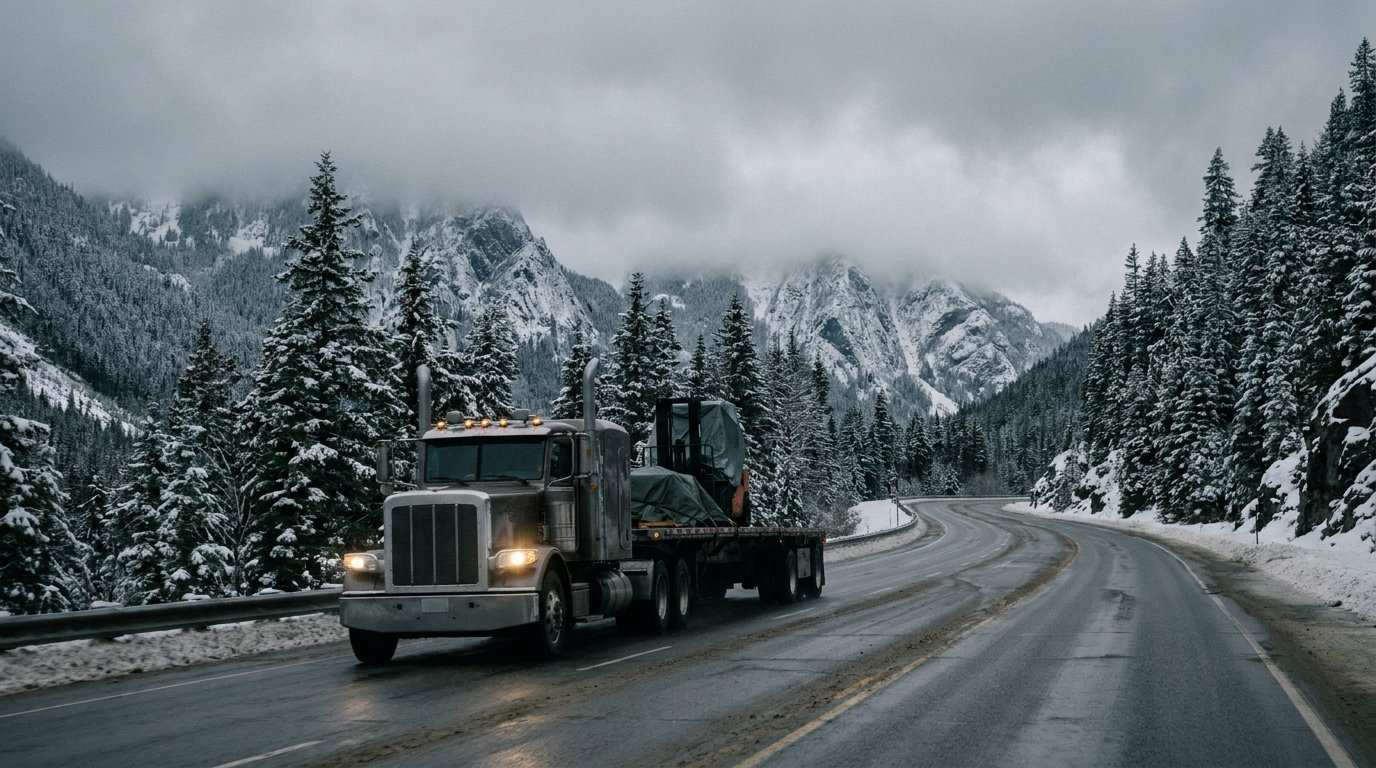
What that means for a buyer:
Build in buffer days. A delivery that takes one day in July can take two in January if a pass closes.
Check DriveBC before the truck leaves, and expect your carrier to do the same.
Ask about tarping. A long run in slush and road salt is hard on electrical components, so a tarp is worth asking for on electric units.
Be flexible on timing. A carrier who holds a load for a weather window is protecting your machine, not stalling.
If you are running a winter operation, our post on winter forklift operation in BC covers what happens after the machine arrives.
How Do You Get Your Site Ready for Delivery Day?
Most delivery headaches happen in the last fifty metres. Before the truck shows up, make sure of the following:
A flat, firm unloading spot. Pavement or compacted gravel, level, and long enough for the trailer to tilt or for ramps to sit square.
Clear access. Check gate width, overhead wires, and turning room for a truck and trailer.
A qualified operator. Someone has to drive the forklift off the deck or take it from the driver. Under WorkSafeBC rules that person needs proper training on that type of truck. See what BC buyers and operators need to know about WorkSafeBC forklift certification.
Fuel or charge. Ask whether a propane unit arrives with a cylinder and whether an electric unit arrives charged. If you are buying electric, have your charger and power sorted before delivery day.
An inspection on arrival. Walk around the unit before you sign the bill of lading. Check the mast, forks, tires, and overhead guard, run it through its functions, and note any damage on the paperwork with photos.
That last step matters more than any other. Once you sign clean, a transport damage claim gets much harder.
Get your next forklift delivered without the guesswork.
Level Warehouse Equipment arranges delivery throughout the Lower Mainland and across BC, and next-day delivery is available on select models. Tell us where the machine needs to go when you ask about a unit and we will give you a delivered quote, so there are no surprises when the truck pulls in. Need a machine for a busy season instead of buying one? We have plenty of seasonal rentals at our disposal too. Browse current inventory or call Troy at 778-792-2293.
Frequently Asked Questions
What affects the cost of forklift transport in BC and Alberta?
The biggest factor is the machine's own weight, which is printed on the data plate and is usually much higher than the rated lifting capacity. Distance and route, mast height, trailer type, site access at both ends, and timing (including rush or next-day requests and winter weather) also drive the price. Ask for a delivered price, not just the machine price.
Which trailer is best for a standard forklift?
A tilt deck (also called a roll-back) is the most common choice for standard counterbalance forklifts going to sites without a loading dock, because the forklift can be driven straight on and off. A flatdeck or step deck may be needed for heavier or taller units, but those usually require a dock, ramps, or a second machine to unload.
How does winter weather affect forklift delivery in BC?
Mountain highways such as the Coquihalla, the Fraser Canyon, the Okanagan Connector, Rogers Pass, and the Crowsnest can see snow, closures, and chain-up conditions. Commercial vehicles on most BC mountain highways must carry chains from about October 1 to March 31. Build in buffer days, check DriveBC, and consider tarping electric units against slush and road salt.
What should I do when the forklift arrives?
Have a flat, firm unloading spot, clear access, and a qualified operator ready. Inspect the mast, forks, tires, and overhead guard, run the machine through its functions, and note any damage on the bill of lading with photos before you sign.
Back to Resources