What Size Forklift Do I Need?
The most expensive forklift mistake has nothing to do with age, brand, or condition. It's buying the wrong size. Too small, and you're constantly overloading the machine, burning through components, and putting operators at risk. Too big, and you've overpaid for capacity you'll never touch, and it probably doesn't fit the building anyway. So if you're asking yourself "what size forklift do I need?", you're already asking the right question. Most buyers skip it entirely.
At Level Warehouse Equipment, forklift sizing is where every conversation starts. Before we talk brands, before we talk price, we talk numbers. Three numbers, specifically. Get those right, and the rest falls into place.
The Three Numbers That Decide Everything
Forklift sizing comes down to three specs: capacity, load center, and lift height. Everything else, including tire type, fuel source, and frame configuration, flows from these three.
Capacity is the maximum load the unit is rated to lift. It's stamped on the data plate in pounds, and it's the first number every buyer looks at. The problem is, most people stop there.
Load center is the distance from the face of the forks to the center of gravity of your load. Standard forklifts are rated at a 24-inch load center. If your loads sit further back, the effective capacity drops, sometimes dramatically.
Lift height is how high the forks need to travel. Sounds obvious, but there's a catch called "free lift" that trips up indoor operations constantly.
If you know these three numbers for your operation, you can walk into any dealership and have a productive conversation. If you don't, you're guessing, and guessing is expensive.
Why Forklift Capacity Isn't Just About Weight
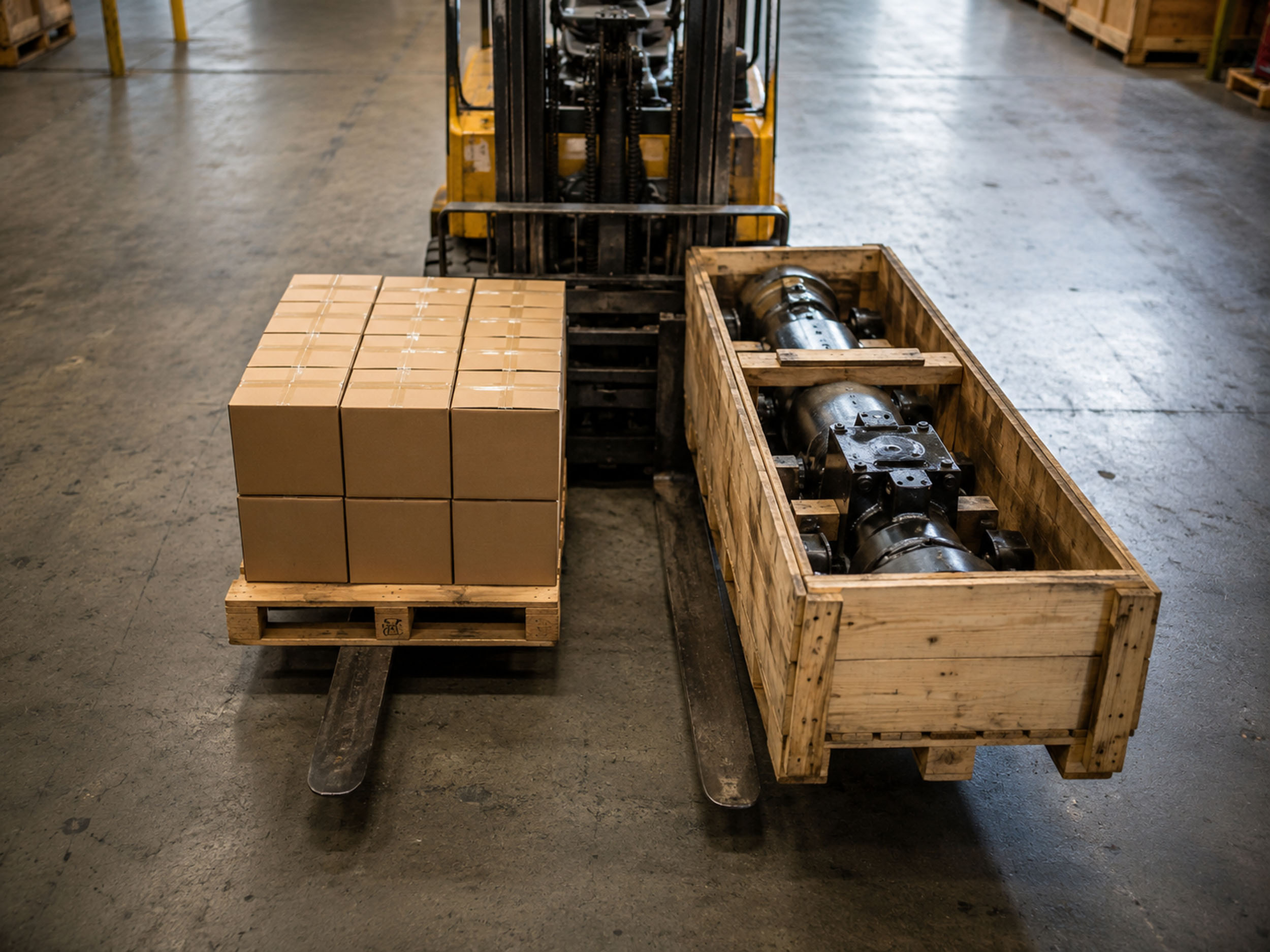
Here's where buyers get burned. A forklift rated at 5,000 pounds doesn't always lift 5,000 pounds. That rating assumes a 24-inch load center, meaning the center of gravity of your load sits 24 inches from the fork face. Move that center of gravity further out, and the math changes fast.
A 5,000 lb forklift at a 36-inch load center may only safely carry approximately 3,300 pounds. That's a 34% reduction in forklift capacity, and most buyers have no idea it's happening.
This matters if you're moving anything that isn't a standard 48-inch pallet. Lumber, pipe, oversized crates, machinery on skids, anything with an irregular shape or deeper footprint will push that forklift load center further out. Before you shop, measure your heaviest and deepest loads. Those are the numbers that determine what you actually need, not what the data plate says in ideal conditions.
Lift Height vs. Free Lift: The Detail That Wrecks Buildings
Lift height is the maximum fork elevation. For outdoor operations, it's usually straightforward. For indoor operations, there's a second number that matters more: free lift.
Free lift is how high the forks travel before the mast starts to extend upward. A forklift with low free lift will push the mast into your ceiling, sprinklers, or overhead door frames before the forks reach top racking.
If you're loading trailers, free lift matters in the trailer box. If you're running inside a warehouse with low ceilings, free lift is the number that decides whether the machine works or doesn't. Get it wrong and you're either replacing ceiling infrastructure or returning a forklift that technically has the right lift height but can't actually use it in your building.
Always measure the lowest overhead obstruction in your facility and compare it to the mast collapsed height plus the mast extension path. This is one of the most common forklift sizing mistakes we see, and it's entirely preventable.
Aisle Width: Matching the Lift to the Building
Your building dictates your forklift type more than your load does. A standard counterbalanced forklift needs roughly 12 feet of aisle width to turn. A reach truck brings that down to about 9 feet. A turret or narrow-aisle unit can operate in as little as 6 feet.
The instinct is to buy the most versatile machine, but a counterbalanced unit in a 9-foot aisle is either going to damage racking or force you to reconfigure the warehouse. Neither option is cheap. And a narrow-aisle unit in a wide-open warehouse is overkill you're paying for every shift.
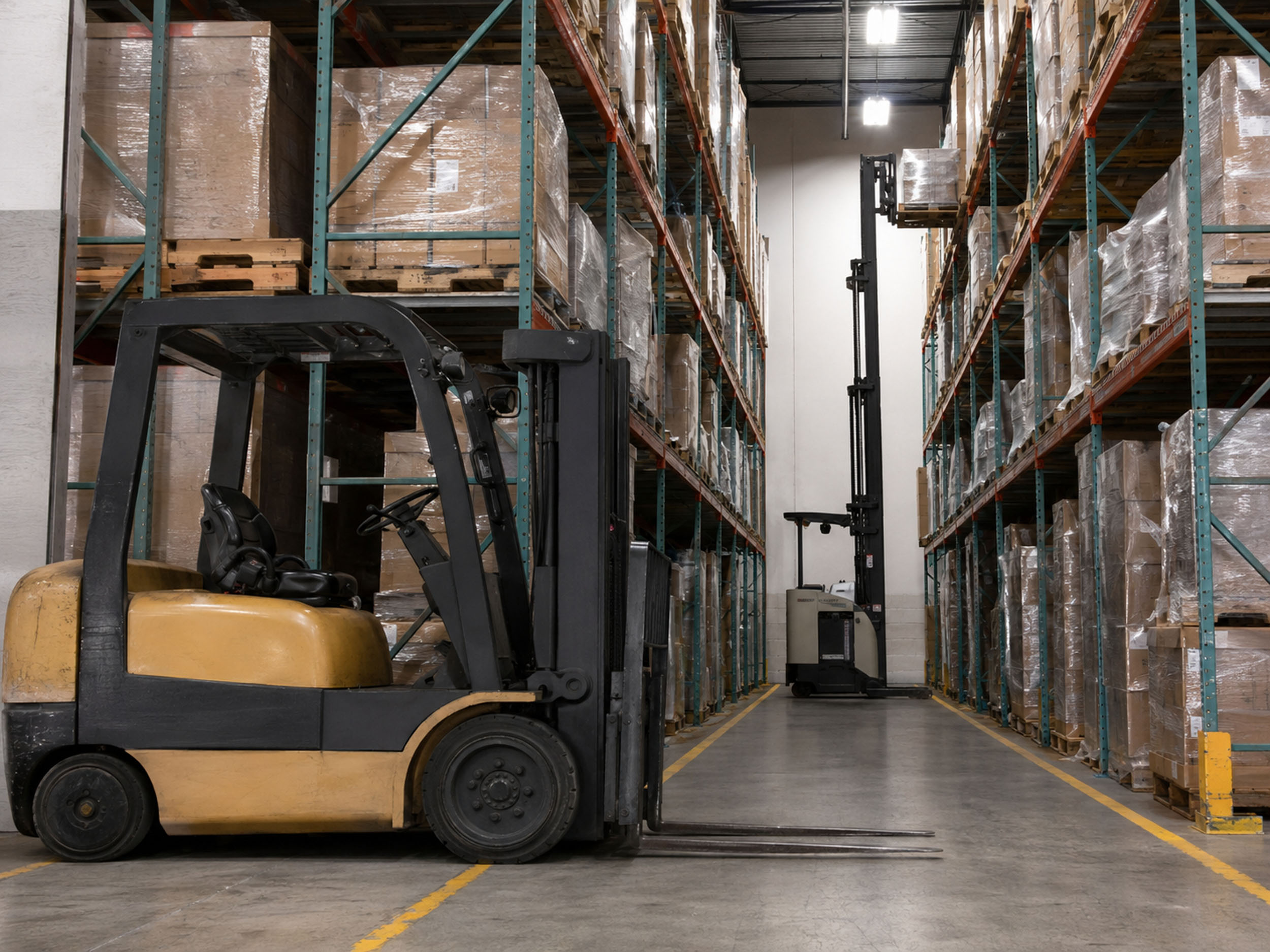
Forklift sizing should start with the building, not the load. Measure your narrowest working aisle, then work backward to the lift types that fit. It narrows the field immediately and prevents the single most frustrating purchasing mistake: a forklift that does the job on paper but can't physically operate in your space.
Indoor, Outdoor, or Both?
This one question eliminates half your options, which is a good thing.
Indoor-only operations typically run cushion tires on smooth concrete. Outdoor work demands pneumatic tires for gravel, asphalt, and uneven ground. If you need both, you're looking at a pneumatic-tire unit that can handle the rough stuff but still operate inside, or a dual-surface setup with solid pneumatics as a compromise.
Tire choice also affects forklift capacity slightly, overall height, and turning radius. Pneumatic-tire units sit higher and turn wider, so that aisle width calculation changes. It's all connected, which is why we work through this decision in sequence rather than jumping straight to a model number.
The Forklift Sizing Conversation in Four Questions
When a buyer calls Level Warehouse, these are the first four questions I ask:
What's the heaviest load you need to move, and how deep is it on the forks?
How high do you need to lift, and what's your lowest ceiling obstruction?
What's your narrowest working aisle?
Are you running indoors, outdoors, or both?
Four questions, and we've eliminated 80% of the catalog. What's left is a short list of machines that actually fit, and that's where the real conversation about condition, price, and availability begins.
If you're not sure about any of those numbers, that's what our free site survey is for. We'll walk your facility, take the measurements, and spec the right machine before you spend a dollar. It's faster than guessing, and it's a lot cheaper than getting it wrong.
Frequently Asked Questions
What does load center mean on a forklift capacity plate? Load center is the horizontal distance from the fork face to the center of gravity of the load. Standard rating is 24 inches. Loads with a deeper center of gravity reduce the effective lifting capacity of the machine.
How do I calculate the actual forklift capacity I need? Weigh your heaviest load and measure its depth on the forks. If the center of gravity sits beyond 24 inches, you'll need to de-rate the forklift's listed capacity or size up. Your dealer can run the specific calculation.
What's the difference between lift height and free lift? Lift height is the maximum fork elevation. Free lift is how high the forks travel before the mast begins extending upward. Free lift determines whether the machine works in low-clearance environments.
Can a forklift be too big for my warehouse? Absolutely. An oversized unit won't fit aisles, costs more to operate, and may exceed your floor load rating. Bigger is not better, correctly sized is better.
Should I size up for future growth? Buy for your current operation plus 10 to 15% headroom. Buying one full size class up "just in case" wastes capital and creates operational problems. If your needs change significantly, trade up then.
Not sure what size forklift your operation needs? Level Warehouse Equipment offers free site surveys across the Lower Mainland. We measure, we spec, and we find the right machine. Call Troy at Level Warehouse Equipment to get started.
Back to Resources