What to Demand from a Used Forklift Seller in BC
You don't need to be a mechanic to spot a bad used forklift purchase. You need to ask the right questions, and pay attention to who refuses to answer them.
The questions to ask when buying a used forklift have shifted over the years, but most of the buyer guides floating around online still tell you the same thing: just get a pre-purchase inspection. That advice sounds smart on paper. In British Columbia, it's barely realistic.
Here's the honest truth. There aren't enough qualified forklift mechanics in this province to handle the inspection demand if every buyer actually followed that advice. Booking a pre-purchase inspection on a unit listed for sale in Burnaby? You're looking at days of waiting, hourly rates that climb fast, and in many cases the unit getting sold to someone else before the inspection ever happens. That's not a buyer-protection plan. That's a paralysis loop.
The better move is to shift the burden of proof onto the seller. The right used forklift dealer will answer every question on this list without flinching. The wrong one will dodge, deflect, or change the subject. That tells you everything you need to know.
The Honest Truth About Used Forklift Inspections in BC
Pre-purchase inspections aren't bad. They're just often impractical given the realities of our market. A trained forklift mechanic in BC is a busy person. Most are tied up servicing fleet contracts and warranty work for OEM dealers. Independent mobile inspectors exist, but they're booking weeks out and they charge by the hour with no guarantee that what they find will save you money on the sale.
If you've got the time and budget for a third-party inspection, by all means get one. But for the vast majority of buyers running on real timelines, the smarter play is making the seller prove the unit before money changes hands. Used forklift due diligence isn't really about who can inspect the unit. It's about who can document it.
That's the framework these questions are built around.
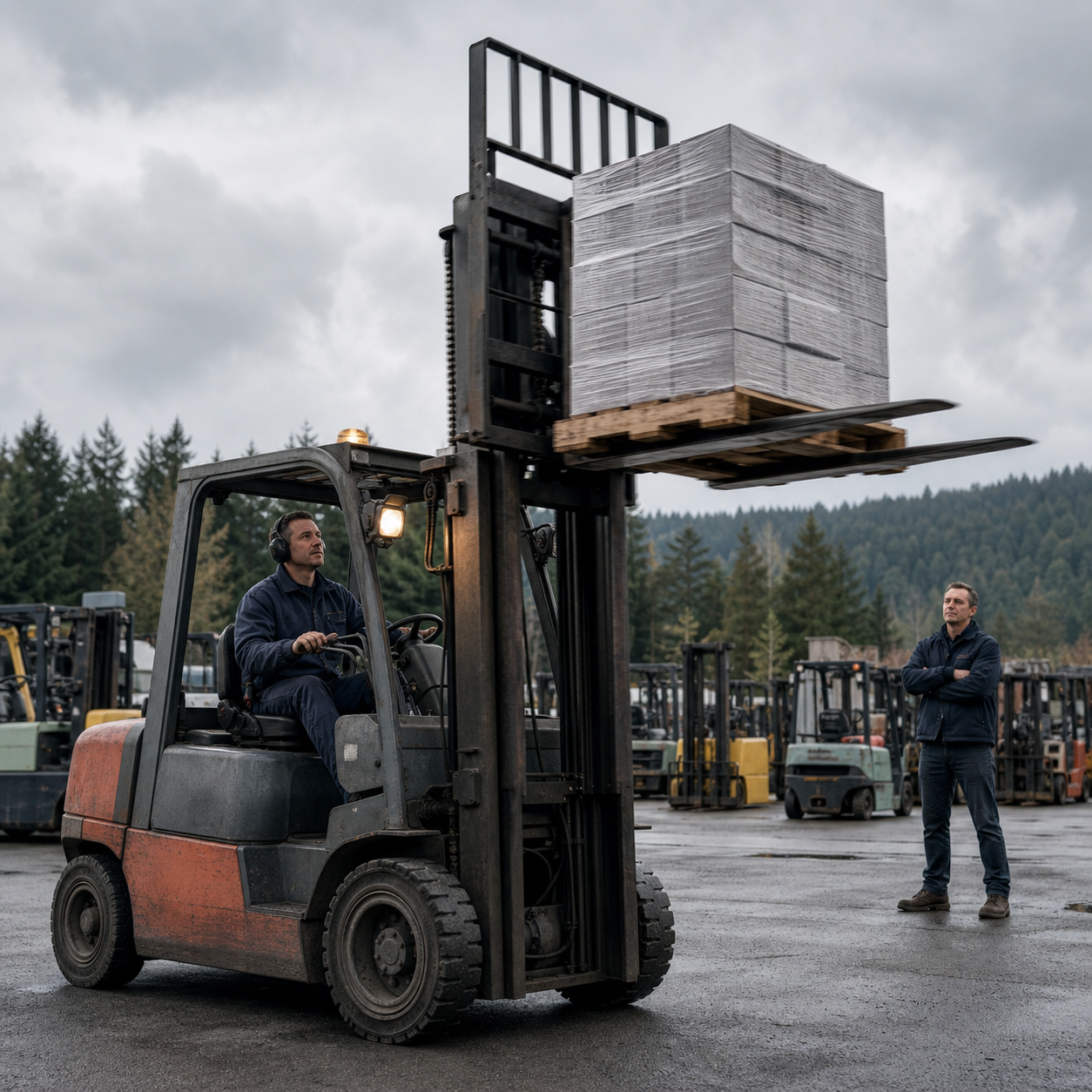
Question 1: How Long Have You Owned This Forklift?
This is the question I open with every time. The answer reveals more than people realize.
A dealer who's owned a unit for six months has had time to operate it, service it, and identify any quirks. A private seller who got it in a fleet auction last week is just flipping a machine they know almost nothing about. Both can be legitimate transactions, but you need to know which one you're in before you decide what else to ask.
If a seller can't tell you when they acquired the unit, walk away. There's no reason to hide that information unless something doesn't add up.
Question 2: Can I See the Service History?
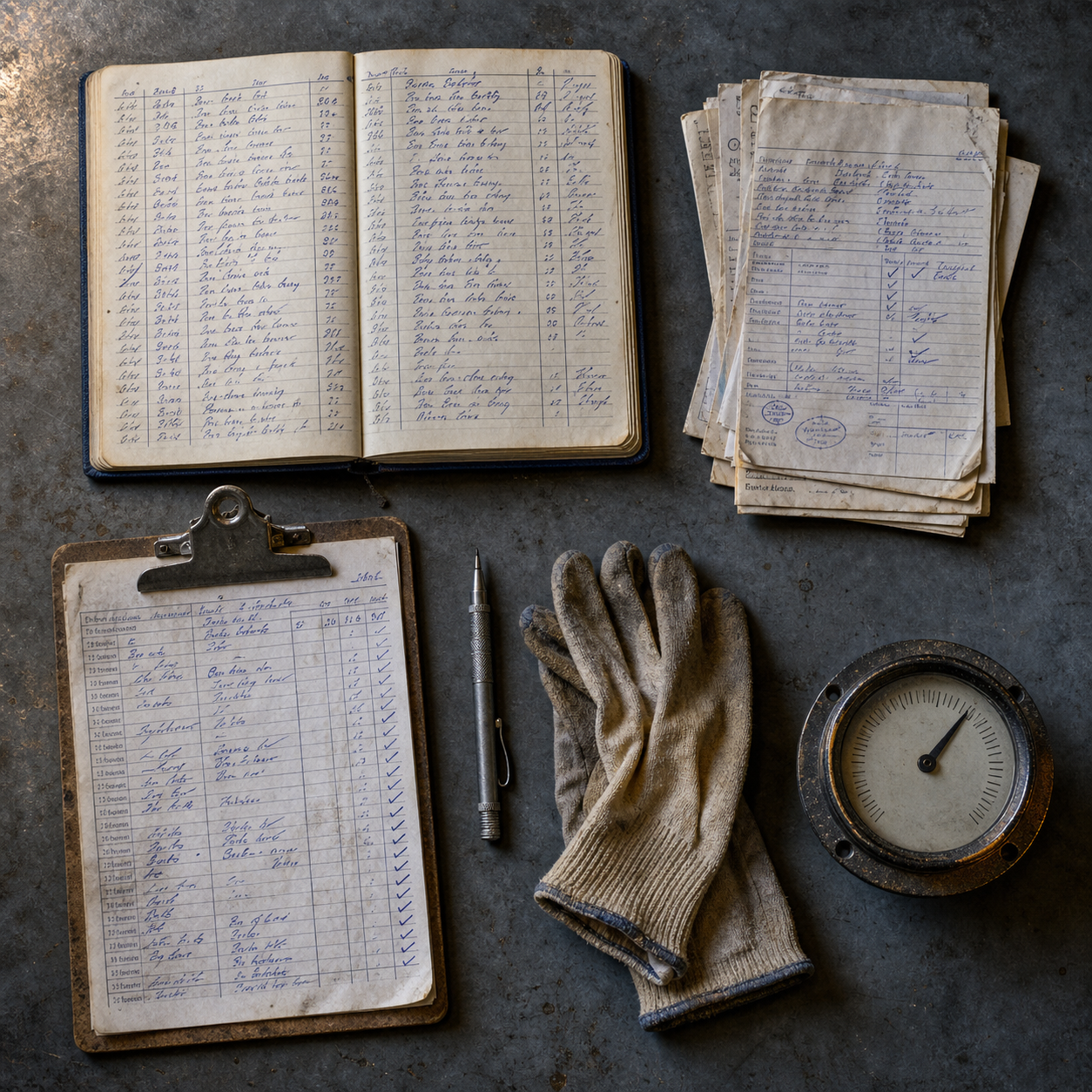
Every legitimate used forklift seller should have something to show you. Maintenance logs, work orders, receipts from past service visits, photos of completed repairs. The format doesn't matter. The presence of records does.
A unit with documented service history is worth significantly more than one without, and it tells you the unit has been cared for. A seller who says "we haven't done much because it's been running great" is telling you they haven't kept records, not that the forklift is mechanically perfect. Those are different things.
If the records are thin, it's not automatically a deal breaker. But the price should reflect the gap.
Question 3: Why Is This Forklift Being Sold?
Watch the answer carefully. Not just what the seller says, but how quickly they say it.
Legitimate reasons include fleet turnover, an operation downsizing, a customer trade-in toward a different unit, or a dealer who acquired it as part of a bulk purchase. All of those are normal. None of them require a long explanation.
The answers that should make you suspicious are the vague ones. "We just don't need it anymore." "The previous operator left and we never got around to using it." "It's been sitting." Forklifts that sit don't sit because nobody loves them. They sit because something is wrong, and the longer they sit, the worse it gets. Hydraulic seals dry out. Battery cells stratify. Tires flat-spot.
If a seller can't give you a clear, specific reason for why the unit is on the market, you're being asked to take the risk for them.
Question 4: What Maintenance Has Been Done in the Last Twelve Months?
This is where you separate real used forklift dealers from the rest.
A serious seller will rattle off the basics without hesitation. Oil changes, hydraulic fluid checks, mast inspections, fork wear measurements, tire condition, brake testing. They'll know whether the planetary gears were serviced. They'll know if the radiator was flushed.
If the answer is "we changed the oil" and nothing else, the unit hasn't really been maintained. It's been kept running. That is a critical distinction. A forklift kept running with the bare minimum will fail you at the worst possible time, usually under load, and the repair bill will dwarf whatever you saved on the purchase.
Question 5: What Warranty or Guarantee Comes With the Sale?
This is the cleanest test of seller confidence. If a seller won't stand behind their unit for at least thirty days, they don't believe in it themselves.
Reputable BC used forklift dealers offer some form of warranty on every unit, even on older inventory. The terms vary, ranging from thirty days powertrain coverage to ninety days bumper-to-bumper, depending on the unit and how it was reconditioned. The point isn't that you'll necessarily need to use the warranty. The point is that the seller is willing to take some of the risk with you.
A private seller offering a flat "as is, no warranty, no returns" has every right to do so. But you need to price the unit accordingly, and you need to know what you're walking into. The savings on a no-warranty private sale rarely cover a single major repair.
Question 6: Can You Show Me the Hour Meter Reading and Recent Operation?
Hour meters can be reset or rolled back. A seller who shows you the meter reading along with photos or video of the unit being operated within the last week is putting their reputation behind that number.
Ask to see the unit started. Ask to watch the forks lift through full travel. Ask to see the unit drive forward and reverse under its own power. A used forklift seller who hesitates on any of these requests is hiding something.
If you can't see the unit operate before money changes hands, the answer is no. There are too many other forklifts on the market in BC right now to take that gamble.
Question 7: Where Did You Source This Unit?
The brand matters less than the answer about sourcing. A unit that came from a fleet operator in Surrey is a different proposition than one bought sight-unseen at an out-of-province auction.
Local sourcing means the seller has been able to see how the unit was used, who operated it, and what kind of conditions it ran in. Auction sourcing means the seller is rolling the dice along with you. There's nothing wrong with auction-sourced units in principle, but you should know that's where it came from, and the price should reflect the additional uncertainty.
A reputable BC used forklift dealer will be transparent about the chain of custody on every unit they sell. The ones who aren't transparent usually have a reason.
What to Watch For When You Ask These Questions
The questions matter, but the answers matter more. Pay attention to body language, response time, and how willing the seller is to put things in writing.
Sellers who provide written answers, photos, service records, and clear documentation are protecting both sides of the deal. Sellers who get visibly uncomfortable when you ask for paperwork are telling you something the words aren't.
Trust your gut. If something feels off, it usually is. There's always another forklift coming up next week, and the right one is worth waiting for.
That's where Level Warehouse comes in. Every unit on our floor has been sourced, serviced, and documented before it ever gets listed. If you want to put these questions to me, give me a call. The answers come without you having to ask twice.
Frequently Asked Questions
Should I get a pre-purchase inspection on a used forklift in BC? If you have time and budget, yes. But qualified mobile inspectors are booking weeks out in BC right now, and many sales happen before an inspection can be scheduled. The practical alternative is demanding documentation and a working demonstration from the seller, then buying from someone willing to back the unit with a written warranty.
What's the most important question to ask a used forklift seller? "How long have you owned this forklift?" The answer tells you whether the seller actually knows the machine or is flipping something they've barely operated. Everything else flows from that answer.
How can I tell if a used forklift's hour meter has been tampered with? Cross-reference the hour meter reading against operator seat wear, mast chain stretch, tire condition, and the service records. Mismatches between these indicators and the meter reading are the classic tell. A seller who refuses to show service records that align with the meter is the bigger red flag.
Is buying from a private seller riskier than buying from a dealer? Generally yes. Private sales typically come with no warranty, no service history, and no recourse if the unit fails after the sale. Dealers carry inventory risk and reputational stakes, which is what backs their willingness to offer warranties. Private sales can work if the seller is transparent and the unit is well documented, but the price needs to reflect the added risk.
What's a fair warranty to expect on a used forklift in BC? Thirty to ninety days is standard, depending on the unit's age, hours, and how it was reconditioned. Powertrain-only coverage is common at the lower end. Bumper-to-bumper coverage on properly reconditioned units is reasonable to ask for at the higher end. No warranty at all means the seller is asking you to absorb 100% of the risk.
How do I verify a forklift's service history? Ask for receipts, work orders, or maintenance logs covering the past twelve months at minimum. A reputable used forklift dealer will have these on file. If the seller can't produce them, ask whether the previous owner can be contacted directly. If neither path works, the unit's history is effectively unknown and the price should reflect that.
What red flags should make me walk away from a used forklift? A seller who can't tell you when they acquired the unit, won't show service records, refuses to demonstrate the unit operating, won't put any warranty in writing, gives vague answers about why the unit is being sold, or pressures you to close the deal quickly. Any one of these is enough to walk. Two or more, and you're being set up.
Where should I look for a reputable BC used forklift dealer? Start with dealers who answer the questions in this article without hesitation, who carry inventory locally so you can see the unit before you buy, who provide written service history, and who back their sales with a meaningful warranty. Level Warehouse Equipment serves the Lower Mainland and beyond, and we structure every sale around the principle that a buyer should never have to take the seller's word for anything important.
Back to Resources